
How to Turn Enterprise Architecture into a Strategic Advantage
Organizations are under intense pressure to align technology investments with business outcomes now more than ever. That’s where enterprise architecture planning becomes a critical capability, not just for IT teams, but for executive leadership driving growth, efficiency, and innovation.
At its core, enterprise architecture (EA) is no longer just about system design or governance. It has evolved into becoming a strategic discipline that connects business goals with technology execution, helping organizations bridge the gap between vision and reality.
In this article, we’ll break down actionable strategies for enterprise architecture planning, while exploring how to elevate EA into a true business driver through enterprise architecture strategic planning.
What Is Enterprise Architecture Planning?
Enterprise architecture planning is the structured process of mapping an organization’s current state (business, applications, data, and infrastructure) to a desired future state, then defining the roadmap to get there.
This aligns closely with how IT strategy is approached:
- IT strategies must clearly define how the enterprise will compete and succeed
- Architecture acts as a discipline that supports governance, execution, and alignment with business outcomes
Similarly, technology roadmap planning emphasizes that initiatives must directly support business objectives, not operate in isolation.
Why Enterprise Architecture as Strategy Matters
Modern organizations are shifting toward enterprise architecture as strategy, not just as a technical function.
According to Gartner-backed research:
- By 2027, 60–70% of enterprises will reposition enterprise architecture to focus on business-outcome-driven transformation rather than traditional IT planning – source: Architecting the next decade: Enterprise architecture as a strategic force | CIO
Additionally:
- 57% of organizations acknowledge that EA insights are currently underused, highlighting a major opportunity to drive more value from architecture programs
These statistics reinforce a key point:
Organizations that treat EA as a strategic capability gain a competitive advantage in decision-making, innovation, and execution.
7 Actionable Tips for Enterprise Architecture Planning
- Start with Business Outcomes not Technology
One of the most common pitfalls in enterprise architecture planning is focusing too heavily on tools, platforms, or infrastructure.
Instead, begin with:
- Business goals (revenue growth, cost reduction, customer experience)
- Strategic priorities (expansion, integration, innovation, risk mitigation)
Your architecture should answer a simple question:
How will technology help the business win?
This aligns with core IT strategy principles where architecture exists to enable business success not operate independently.
- Build a Clear Current vs. Future State Model
Effective enterprise architecture strategic planning requires clarity on:
- Current state (systems, processes, policies, data flows)
- Future state (desired capabilities and outcomes)
- Gaps between the two
Research shows that mapping current and target states is a foundational step in achieving measurable EA outcomes.
✅ Tip:
Use visual architecture diagrams or capability maps to simplify communication with executives and stakeholders.
Example Architecture Diagram: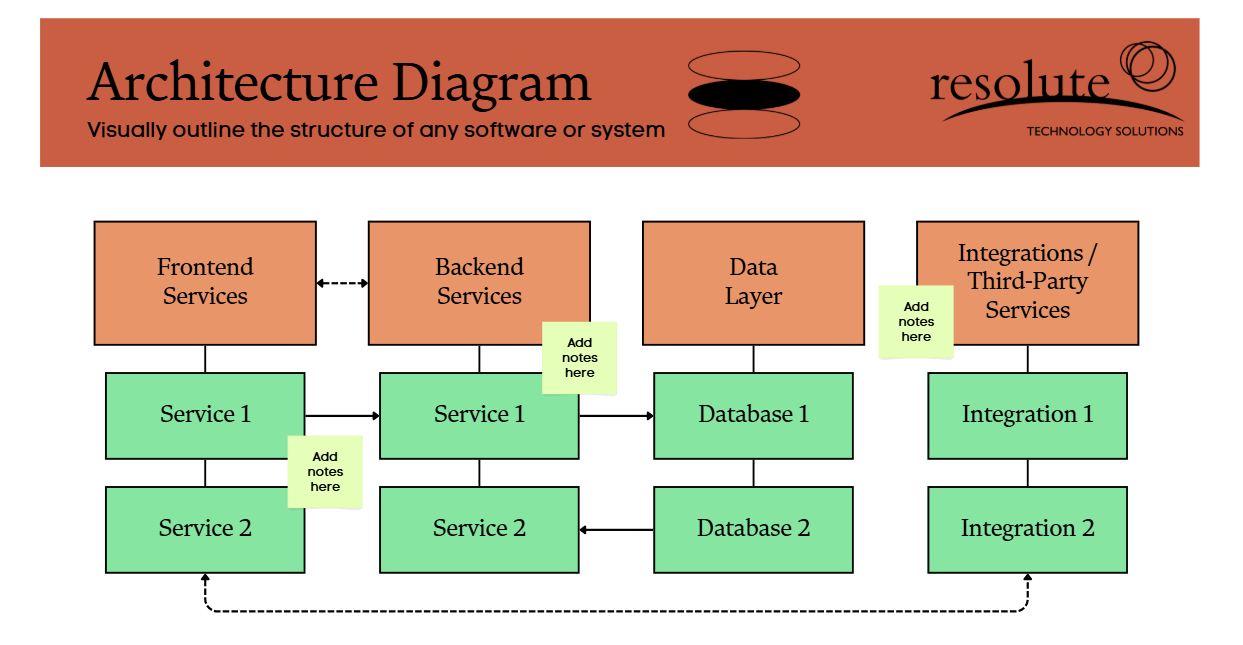
- Develop a Strategic Technology Roadmap
Your roadmap operationalizes enterprise architecture planning.
A strong roadmap should include:
- Strategic goals tied to business outcomes
- Key initiatives (cloud migration, application rationalization, infrastructure modernization, etc.)
- Timelines and milestones
- Resource allocation and risk management
A well-structured roadmap helps translate technical work into measurable business value and secure executive buy-in.
- Align Architecture with Governance and Decision-Making
Enterprise architecture must influence decision-making not just document it.
Modern EA functions are evolving into:
- Strategic advisors to leadership
- Coordinators of governance across IT and business teams
- Drivers of investment prioritization
Gartner emphasizes that EA is becoming a central “decision system” that connects strategy, capabilities, and execution.
Source: The New Architecture Mandate: Insights from Gartner IOC 2025 – Enterprise Architecture Professional Journal
✅ Tip:
Establish architecture review boards and governance frameworks to ensure alignment across initiatives.
- Focus on Value Streams, Not Just Systems
Traditional EA focused on systems and processes. Modern EA focuses on value delivery.
This means:
- Understanding how value flows across the organization
- Aligning architecture to customer outcomes
- Identifying bottlenecks in service delivery
- Measure Success with Business Metrics
Enterprise architecture planning must demonstrate measurable impact.
Common metrics include:
- Cost optimization (reduced redundancy and IT spend)
- Faster delivery timelines
- Improved alignment between projects and strategy
- Reduced operational risk
Organizations using EA effectively report better governance, efficiency, and risk management outcomes.
✅ Tip:
Tie every architectural initiative to a KPI that matters to leadership.
- Treat Enterprise Architecture as a Continuous Process
Enterprise architecture functions best when it is not treated as one-time initiative but rather as an evolving discipline.
Effective programs:
- Continuously revisit strategy based on business changes
- Adapt to emerging technologies (AI, cloud, automation, cyber threats)
- Update architecture models when warranted
Modern frameworks emphasize ongoing iteration as key to keeping architecture relevant and aligned with business needs.
Source: Gartner’s Enterprise Architecture Framework – Enterprise Architecture Work
Common Pitfalls to Avoid
Even mature organizations struggle with enterprise architecture planning when they:
- Treat EA as documentation instead of strategy
- Fail to engage business stakeholders
- Focus solely on technology decisions
- Don’t track measurable outcomes
- Ignore proven EA Frameworks
Avoiding these potential hurdles ensures your EA program delivers real value—not just theoretical models.
Final Thoughts: Turning Enterprise Architecture into a Growth Driver
Enterprise architecture has evolved far beyond its traditional role. Today, enterprise architecture as strategy is essential for organizations that want to stay competitive, agile, and resilient.
By focusing on:
- Business alignment
- Strategic roadmapping
- Value-driven planning
- Continuous improvement
You can transform enterprise architecture planning into a powerful driver of innovation and business success.
TL;DR Quick Summary
- Enterprise architecture planning aligns technology with business strategy
- EA is shifting from IT support to a strategic decision-making function
- Focus on business outcomes, not just systems
- Build clear current vs. future state models
- Use roadmaps to drive execution
- Measure impact with business metrics
- Treat EA as a continuous, evolving process